Stay informed and inspired with biodiversity updates and insights!
If you're having trouble viewing this email, you cansee it online.
Biodiversity Caucus - Fall 2026 Newsletter
In This Issue
Message from the Caucus: COP 17
Mainstreaming IPBES
Member Spotlight: Global Foundation Alberta Canada
Nature in Your Neighbourhood
Personhood of Pemadeshkodeyong (Rice Lake) Recognized by Alderville First Nations – A First in Ontario
Environment and Climate Change Canada: Canada Launches Expert Taskforce on Natural Capital Accounting and Nature Financing
Reflection on Earth Overshoot Day 2026: Why Biocapacity Matters
Special Edition on COP 17
Get involved with the Caucus
Message from the Caucus
Convention on Biological Diversity Conference of the Parties 17
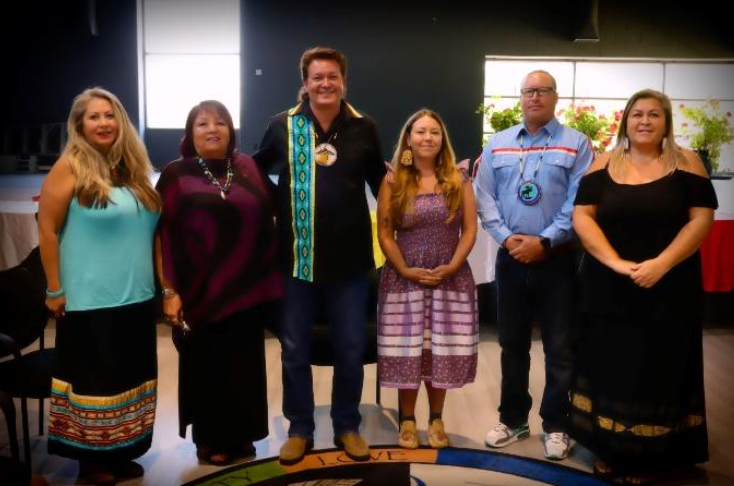
In October 2026, government and civil society will come together for the 17th Conference of the Parties (COP 17) to the Convention on Biological Diversity. Between 10,000 and 30,000 people will convene in Armenia for two weeks to negotiate outcomes for BioDiversity. The Reseau Canadian Environmental Network (RCEN), and Sierra Club are sending delegates to Armenia for COP 17 to bring your points and voice to Armenia, and to bring firsthand experience to help shape our directions in Canada. Our Two delegates are Shauna Doll (RCEN) and Hannah Carey (Sierra Club).
Shauna Doll - Halifax, Nova Scotia
Hannah Carey - Sherbrooke, Quebec
Shauna Doll (she/her) is a settler originally from Treaty 8 Territory in what is presently known as northern Alberta. She is a curious and passionate conservation scientist and restoration practitioner. She has a bachelor’s degree in Environmental Sustainability and a master's degree in Resource and Environmental Management, both from Dalhousie University in addition to a Professional Certification in Ecological Restoration from University of Victoria. Her experience is rooted in coastal forests, notably the Wabanaki/Acadian forests characteristic to New Brunswick and Nova Scotia, and Coastal Douglas-fir forests found along the shores of the Salish Sea. She has worked on Canada’s east and west coasts as well as abroad but now calls the Eastern Shore of Mi’gmagi (Nova Scotia) home. Shauna works in local government and in the not-for-profit sector. She is a Steering Committee member for both the Canadian Environmental Network Biodiversity Caucus and the Nova Scotia Invasive Species Council.
Hannah Carey (she/her/elle) grew up and currently resides in Kchi Nikitawtegwak (Abenaki) or Sherbrooke (English); this place is where her connection to nature started and has continued to evolve throughout her life and career. She pursued her interest in the natural world by completing a Bachelor of Science from Bishop’s University and a master’s of Natural Resources Management from the University of Manitoba. During her career, she’s been privileged to contribute to various conservation research projects and environmental work with an array of species, and within various ecosystems and communities. In life, she’s discovered new avenues to support nature and biodiversity – especially as an amateur gardener attempting to support more biodiversity in her own backyard. Hannah currently works as the Québec Program Coordinator for the Youth EcoStewards program, initiated by Invasives Canada. She is a board member with the Canadian Environmental Network and secretary for the Biodiversity Caucus.
We need your help to get them there
Our goal to get both delegates to Armenia is $9,0000 to cover flight and carbon offset, insurance, lodgings, and a stipend for daily expenses. That means 90 people giving $100 gets us to the mark. Any amount that you can give will help greatly. Are you one of our COP 17 enablers? Can you or your organization help? We hope the answer to both questions is yes. This is a charitable donation and you will receive a tax receipt from Sierra Club. If you can see yourself being part of our Team COP 17, you can donate by clicking the button below.
Please make sure you enter COP 17 in the comment section. If you have questions, want to figure out how to give flight points or maybe have a connection to lodgings in Yerven, or any other idea or question, please reach out to the dedicated email for this work: rcenCOP17@sierraclub.ca
Why We Are Doing This?
because Biodiversity Matters. Biodiversity is the living world, our biotic and abiotic communities. It includes the smallest living thing to the largest animal or plant, and our ecosystems, and comes together to support and nurture life on Earth.
because The Convention on Biological Diversity (CBD) Matters. The CBD is the convenor for countries around the world to set a collective course. The CBD has an agreement that forms the basis of the global efforts and sets the Global Biodiversity Framework. The Kunming – Montreal is our guiding framework to 2030. Mainstreaming this across Canada is a large part of the caucus efforts.
because participation matters, and Canadian voices matters. RCEN has a long history of Canadian participation at international meetings. Delegates return home with a deepened and broadened understanding of how Canada and Canadians can contribute and support positive outcomes and decisions for Biodiversity, across Canada and internationally. Canadian voices come to the negotiation with a respectful and thoughtful approach and are heard.
If you want to join the small team working on fundraising for COP 17, please reach out to biodiv-sdgs@sierraclub.ca
Next Steps and Preparation
Dedicated newsletter
COP 17 focus areas
Gathering comments and contributions through written submissions and a webinar (week of October 5, 2026)
Forming our statements and positions
Mainstreaming IPBES
Intergovernmental Policy Platform on Biodiversity and Ecosystem Services (IPBES) is to the Convention on Biodiversity as the IPCC is to the Climate Change Convention. RCEN is looking to help mainstream the information and reports from IPBES so as to forward uptake and progress on KM GBF and the Convention on Biological Diversity.
A webinar on key knowledge gaps highlighted in the Methodological Assessment Report on the Impact and Dependence of Business on Biodiversity and Nature’s Contributions to People (Business and Biodiversity Assessment), approved at IPBES 12, and more generally on strengthening the uptake and fostering actions to address knowledge gaps identified by IPBES assessments.
In this quarterly stakeholder meeting, the IPBES secretariat will provide an update on the work programme, including scheduled events and opportunities to contribute to the work of IPBES. All IPBES stakeholders, interested individuals and organizations, irrespective of membership of the IPBES self-organized stakeholder networks, are warmly invited to join this call.
Little frog creates huge ripples amongst landowners in the Beaver Hills Biosphere
There is a welcome sound emanating from wetlands near the headquarters of the Global Foundation of Social Harmony & Sustainable Development (GFoundation) east of Edmonton, Alberta. It is the throaty song of the tiny Boreal Chorus Frog which are stirring things up in ponds and minds across the UN-designated Beaver Hills Biosphere (BHB) in central Alberta.
“We never imagined that such a small creature could capture the imagination of a whole Biosphere which contains wetlands of global significance,” said Gfoundation Executive Director, Lucien Royer. “The boreal frog is an indicator of their overall condition.
It all started with a news story about a project undertaken by the GFoundation to prevent the frog from becoming an endangered species. (CLICK HERE to view the story) It attracted the attention of the Alberta Biodiversity Monitoring Institute (ABMI), which agreed to collaborate on a monitoring program to inform the effort.
With the consent of local landholders, audio devices were installed on nearby trees to provide data about the movement of frogs and everything else that stirs in the pond - other frogs & amphibians, birds and wildlife. The monitoring equipment will provide the GFoundation with a stream of reports about the activities of a wide range of animals, vital information that will enable informed adjustments to an expanding project
With the participation of landholders and other volunteers, the original one-acre project has grown from 160 to 640 acres. An ad hoc ‘monitoring group’ of surrounding landowners is now planning to extend the monitoring effort to over 1,000 acres. Its first formal meeting will consider how to eventually expand the project to include landowners in the whole southern portion of the Beaver Hills Biosphere, an area of approximately 180,000 acres. For more information, see https://www.gfoundation.ca/
Local Biodiversity Initiatives Spotlight
Installment Four: Climate Adaptation in Halifax, Nova Scotia
The “Local Biodiversity Initiatives Spotlight” is a section of the Biodiversity Caucus’ newsletter that seeks to highlight innovative approaches to foster and improve biodiversity by local governments and organizations across Canada. It is written by Shauna Doll, an Environmental Specialist working for Halifax Regional Municipality and member of the RCEN Biodiversity Caucus. If there is a project you would like to see highlighted as part of this series, please send your idea to shauna.doll@halifax.ca.
Introduction
Halifax Regional Municipality (HRM) has been a long-time actor on climate change, being the fifth city in Canada to join the Federation of Canadian Municipalities’ Partners for Climate Protection in 1995. Though Halifax has had plans and targets in place for decades, none that were sufficient to meet the call from the scientific community to make meaningful progress on climate change mitigation and adaptation. In 2020, Halifax Regional Council unanimously adopted HalifACT: Acting on Climate Together, a transformational, ambitious, and scientifically informed long-term climate action plan. It is a comprehensive plan in that its actions range from retrofitting all municipal buildings, to electrifying the municipal fleet, to educating the public, to enhancing municipal biodiversity.
Though achieving the goals of HalifACT is the responsibility of all municipal business units, it is directly supported by the Environment and Climate Change division (ECC) which is made up of five teams: Climate Adaptation, Collective Impact, Energy, Environment, and Governance. This article is the result of a conversation with Manager of Climate Adaptation, Shannon Fernandas and it seeks to demystify options for municipalities to employ climate adaptation strategies to shape more resilient futures for their residents.
Defining climate adaptation
Climate change is intensifying and increasing the frequency of extreme weather and associated events like storms, hurricanes, heatwaves, and droughts. Because past and current emissions have already locked in a certain degree of change, preparation for current and projected impacts is vital. Climate adaptation involves action at every scale including all levels of government, local communities, families, and individuals to build resilience to current and future climate risks. Because the effects of climate change are already being experienced to differing degrees the world over, climate adaptation looks different across the country, across communities, and even across neighborhoods. It includes strengthening social systems, such as community networks and public health, as well as reinforcing physical infrastructure like homes, buildings, roads, and other assets.
In a municipal context, climate adaptation is everything because everything a municipality does is intended to build stronger, more connected and thriving communities. All that work ultimately builds climate change resilience. This includes the more conventionally thought of actions like expanding the use of low-impact infrastructure (e.g., rain gardens, bioswales) but also more community focused actions like investing in public health programs and addressing housing or food insecurity. All of this helps build community networks and where people are connected, they are safe, and where they are safe, they are resilient. Everything that a municipality, or anyone does, to help foster that kind of connection building is part of adapting to climate change.
Climate adaptation challenges and mainstreaming
Though scarcity of funds, resources (e.g. staff capacity), and technical expertise seem to plague most climate adaptation projects, one singular challenge seems to be the most difficult to overcome: long-term planning (or a lack thereof). Particularly in the current political moment, a pervading myopia of fiscal austerity often results in climate adaptation features being value engineered out of new projects and long-term planning. Whereas most governments in Canada operate on a short election cycle, the value of short term wins often result in long term investments being deprioritized, ultimately resulting in a lack of political will and community buy-in.
This is not altogether surprising. In the face of short term, more immediate crises like affordability demanding attention and resources, the competing and longer-term priority of climate change action seems to be easily overlooked. Yet, approaching short-term crises without factoring in long-term climate impacts will weaken any efforts made toward solving either problem. For example, building housing supply in an inappropriate area, like a flood plain, will result in homes that are likely to require repair, rebuilding, and may even face uninsurability over time as climate impacts worsen. This housing will no longer be safe or affordable, rendering early efforts to mitigate housing instability and unaffordability ineffectual.
The kicker is that baking climate resilience into infrastructure projects actually makes them cheaper. Take housing for example, climate-resilient housing has a higher upfront cost, but typically only by about 5–10%. However, those initial investments, such as improved energy efficiency or basic flood-resilience measures pay off through lower long-term operating costs and reduced risk of damage. The core challenge is the financial disconnect: developers pay the initial capital costs, while homeowners or tenants benefit from the long-term savings. Because those who invest are not the same as those who benefit, essential resilience measures are often overlooked, even though they serve a broader public good.
Climate adaptation must be integrated into everything, but this mismatch between those making design and construction decisions not being the ones who benefit from long-term resilience limits implementation. Efforts are underway to close this gap. For example, the forthcoming 2025 National Building Code includes significantly stronger climate-resilience requirements compared to the 2020 version. However, adoption remains uncertain. In Nova Scotia, even the 2020 code required substantial advocacy to be approved, and it is unclear when (or if) the province will adopt the 2025 update. As a result, despite clear standards that would help mainstream climate-resilient housing, progress is shaped by provincial political decisions. Developers are only required to follow it once the province accepts it. As one scholar notes, “Canadian municipalities are “creatures of the province” which underscores why provincial decisions so strongly shape local climate-adaptation outcomes.
Examples of adaptation in action in Halifax
HRM is investing heavily in resilient infrastructure. In 2021, the Build Back Better (BBB) program, an internal program funded by the Strategic Infrastructure and Climate Funding (until recently called the Climate Action Tax) was established to create the necessary financial capacity to rebuild infrastructure that has been damaged by extreme weather, is markedly at risk from climate change impacts like flooding, or has reached end of life with more climate resilient alternatives. This fund was deemed necessary because Insurance and regular municipal budgeting processes only budget for straight replacement, leaving the new piece of infrastructure just as vulnerable to climate change as it was before. The BBB program funds the differential between the like for like replacement and a more resilient option. What this looks like in Halifax includes:
installation of bigger culverts,
construction of roads with added stormwater management capacities,
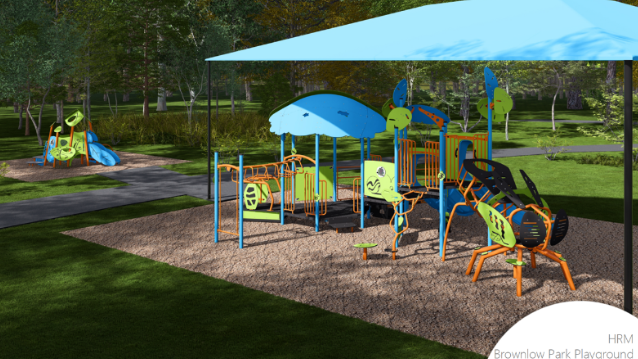
installation of shade sails above play structures in parks,
restoration and softening of freshwater and coastal shorelines,
use of permeable pavers in parking lots, and
installation of bioswales and rain gardens in around our community centers.
In addition to infrastructure resilience, climate work in Halifax is increasingly seeking to improve community resilience, because a healthy community is one that is more resilient to climate change. One example is the development of the JustFOOD Action Plan, a long-range strategy for building a healthy, just, and sustainable food system in HRM to help tackle local food insecurity. Other examples include the Youth Climate Action Fund, designed to empower young people to take meaningful action on climate change in their communities and programs like Climate Commitment Badges, which recognizes and celebrates achievable goals that community members can take to improve the well-being of their families, friends and community, while also working to secure a stable climate for future generations. While these are not explicitly capital C, capital A Climate Adaptation, they all contribute to that community connectedness that builds resilience across HRM. Climate adaptation looks like 100 different things and Halifax is trying to incorporate as many as possible as much as possible.
When looking at climate adaptation through this lens, one starts to notice examples of adaptation everywhere, spearheaded by individual community members like the incorporation of sump pumps into home construction and yard and boulevard naturalization using native species to create pollinator habitat. This sort of momentum is fostered by essential community and organizational partners. In Halifax these include organizations like Ecology Action Center, How We Thrive, and Every One Every Day, that bring people together for things that may seem unrelated to climate change, like sewing circles, potluck nights but also host essential emergency preparedness workshops where people learn how to build a thirty-six hour emergency kit. Those are all different ways of building community resilience.
What makes climate adaptation possible.
For climate adaptation to become a focus in Halifax many different pieces had to fall into place. Importantly, HalifACT was championed by a very supportive Regional Council headed by a very supportive Mayor in 2020. Additionally, the former Climate Action Tax was adopted, which at that time could not be used for anything but climate adaptation. This is significant because oftentimes decision-making bodies say the right things about climate change and ecosystem preservation, but without resources to operationalize policies nothing changes.
Further, climate adaptation options, especially in infrastructure projects, are viewed as “nice to haves” and easily get value engineered out of projects. Now that the focus of the Climate Action Tax has shifted slightly, it remains to be seen whether momentum around climate adaptation can continue to grow in the face of other crises.
Another reason why climate adaptation action is so possible in Halifax is because we have a strong community assembled around this work. We HalifACT was brought to Regional Council, there was a huge showing of support from individuals and organizations who all really understood the value of climate adaptation in preparing a community for the changes that are coming.
Though the current political climate observed across Canada has been demonstrative of a low political will to pursue the climate agenda, one of the best ways to keep climate on the table is to ensure that climate adaptation is being considered in everything the municipality does. Efforts to mainstream these concepts are critical. Another way to look at this is to remember that climate adaptation does not need to be novel, exciting, nor grand, but rather should be framed as the new business as usual. From this perspective people can easily understand that if a playground is to be built, it ought to be a good, safe playground. If a new bridge needs to be constructed, it ought to be able to withstand potential storm surges and floods. Holding the line on these standards is how they become normalized.
Currently across Canada, climate initiatives are being sidelined in favour of addressing the dual crises of housing supply and affordability. Yet climate action can directly support both. The interesting thing about climate action is that it is never just about climate action. It is about the co-benefits and the multi-problem-solving potential. For example, if a municipality invests in a fleet of electric buses, it is not just about reducing emissions, it is about saved fuel costs, reduced noise pollution, better urban air quality (which in turn leads to improved health outcomes), etc. In this way, one decision can create the potential for so much good. It is essential to highlight how climate action is not separate from current political priorities. When this potential can be clearly articulated, climate action stops being seen as an added cost or a competing priority. Instead, it becomes a practical, common-sense component of achieving broader social and economic goals.
Finally, when it comes to climate adaptation, perfect cannot be allowed to be the enemy of good. Implementation will never be perfect, and this is why monitoring and evaluation are indispensable steps for ensuring work is still good and impactful. Unfortunately, oftentimes climate adaptation approaches (like low-impact development) are held to a different standard than conventional infrastructure where there is no room to fail. Governments do not stop building roads because they get potholes. In fact, they generally double down on building more roads and filling more potholes again and again. Yet, climate adaptation projects are often framed as “pilots” or “trials”, and if not performing at 100% they are often used as examples to justify no additional adaptation progress. Flexibility and creativity is required to build climate adaptation into municipal work, so that every project propels a community toward more resilience. Sometimes things will go wrong, but if they do remember the potholes.
Personhood of Pemadeshkodeyong (Rice Lake) Recognized by Alderville First Nations – A First in Ontario
By: Leslie Adams, Sierra Club Canada
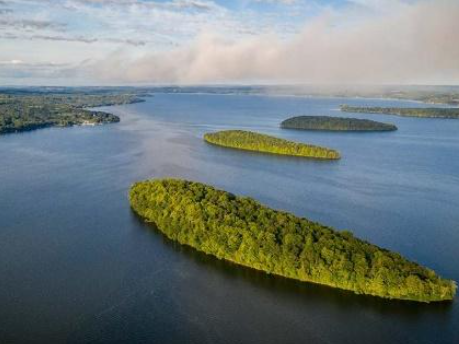
Rice lake image from Consider This
Alderville First Nation identifies as Anishinabek People, with inherent rights, culture, and language. In November 2025, Alderville First Nation’s Band Council unanimously passed a resolution recognizing the personhood of Pemadeshkodeyong (Rice Lake). Through this action, Chief Simpson and Band Council took an important first step- a step towards shifting the Western view of nature as property to one that recognizes First Nations ways of being in relationship with the natural world. The work ahead aims to ensure that Pemadeshkodeyong voice is included in the conversation for matters dealing with its’ personhood and recognized rights.
In response to increasing pressures on the natural world, phrases such as personhood for nature, rights of nature, and others, are being discussed globally. Amongst hundreds of efforts across the planet, 8 to 12 Canadian efforts are noted through the Eco Jurisprudence Monitor and the UN Harmony with Nature platforms. Canadians are beginning to engage with this shift and discussion.
With the historic first recognizing Pemadeshkodeyong’s personhood, Alderville First Nation is now exploring what approach will give the voice to Pemadeshkodeyong. Chief Taynor Simpson has been engaged across Canada and internationally in granting personhood to Rice Lake. Events in 2025 included the High Level Political Forum at the United Nations Harmony with Nature New York, April 22, 2025. In November, Chief Simpson attended United Nations Framework Convention on Climate Change Conference of the Parties 30 (COP30), as a delegate and on the panel at the Canadian pavilion “Granting Rights to Nature: A Solution for Climate Action”. November also saw the Band Council resolution made formal.
There are a multitude of cultures, traditions, and practices that Pemadeshkodeyong gives Alderville First Nation. This expert from the statement of Chief Simpson to the United Nations on Mother Earth Day 2025, gives you a feeling for why Alderville First Nation has recognized the personhood of the Lake
“Humans are a part of Nature, not apart from it. We need a world view that protects Mother Earth as we depend on her for everything that sustains us. Post World War II saw an economic world order that focused on maximizing corporate profits and bottom lines at the expense of the Earth upon which we live. Economic hardlines have accelerated the exploitation of the natural world. Mother Earth needs some help from her children”.
The efforts underway for more than human rights are supported by many groups and individuals as we collectively explore ways to move past the post-industrial complex and find ways to Living in Harmony With Nature, which is the Vision for the Global Biodiversity Framework.
Reflection on Earth Overshoot Day 2026: Why Biocapacity Matters
In this article, Steve Hounsell explores the significance of Earth Overshoot Day and the concepts of biocapacity and the Ecological Footprint
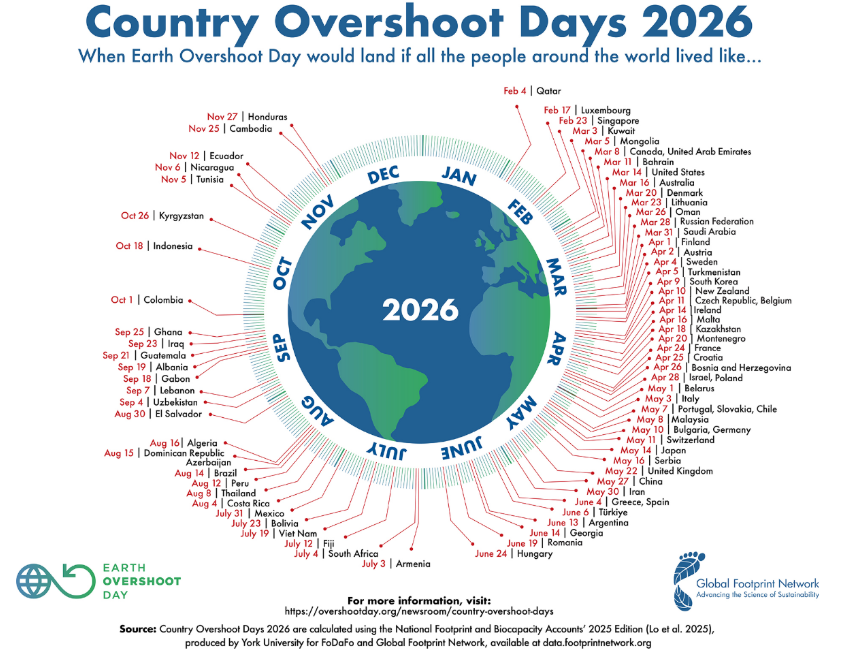
Earth Overshoot Day marks the point in the year when humanity has used all of the ecological resources and services that Earth can regenerate in that year. This year, Earth Overshoot Day fell on July 30, meaning that for the remainder of the year, humanity is effectively exhausting the planet’s natural capital.
Global overshoot has persisted since the early 1970s. According to the Global Footprint Network, humanity is currently using nature at a rate equivalent to 1.73 Earths, meaning we are using ecological resources 73% faster than Earth’s ecosystems can regenerate them, representing the highest level of global ecological overshoot recorded to date. The effects of this overuse include biodiversity loss, deforestation, soil erosion, and rising CO₂ levels.
However, ecological overshoot is not only an environmental issue, but also a question of resource security and economic resilience. The Global Footprint Network argues that preparing for resource constraints should not be viewed as an environmental cost, but as a form of long-term risk management. Reducing resource dependence, investing in renewable capacity, and protecting the ecosystems that underpin food and water security can strengthen countries’ resilience to ecological and resource-related pressures and move us towards an ecologically sustainable future.
At the heart of Earth Overshoot Day is the concept of biocapacity: the amount of biological resources and services that Earth’s ecosystems can regenerate in a given year. Earth Overshoot Day determines how many days Earth’s annual biocapacity can sustain humanity’s Ecological Footprint. When our demand exceeds what Earth can regenerate, we enter ecological overshoot.
The Ecological Footprint and Biocapacity concept was developed in Canada by Mathis Wackernagel and Bill Rees at the University of British Columbia in 1991. Today, the Ecological Footprint Initiative at York University produces the National Ecological Footprint and Biocapacity Accounts, in partnership with the Global Footprint Network. These national accounts are used to calculate Earth Overshoot Day.
Biocapacity provides an important way to understand the relationship between human demand and the health of the ecosystems that support us. For biodiversity in particular, it offers a way to connect patterns of resource use with the growing pressure being placed on nature and the global biodiversity loss that has increasingly occurred since the early 70s. Earth Overshoot Day is therefore a reminder that protecting biodiversity also means addressing the scale of our demands on the ecosystems we depend on, and reducing the pressures we place on their ability to regenerate.
The next caucus newsletter will be dedicated to COP 17. The aim is to distribute it October 3. Look for it coming to your inbox soon.
RCEN supports ENGOs and individuals by providing valuable networking, communications, and resource-sharing services. From coast to coast, we collaborate on bold, positive, and future-focused solutions to the climate crisis. Our Biodiversity Caucus, in particular, plays a pivotal role in linking local and global efforts to protect and enhance biodiversity. By joining the Biodiversity Caucus, you can directly contribute to implementing the Convention on Biological Diversity (CBD), raising awareness, building capacity, and encouraging proactive action.